
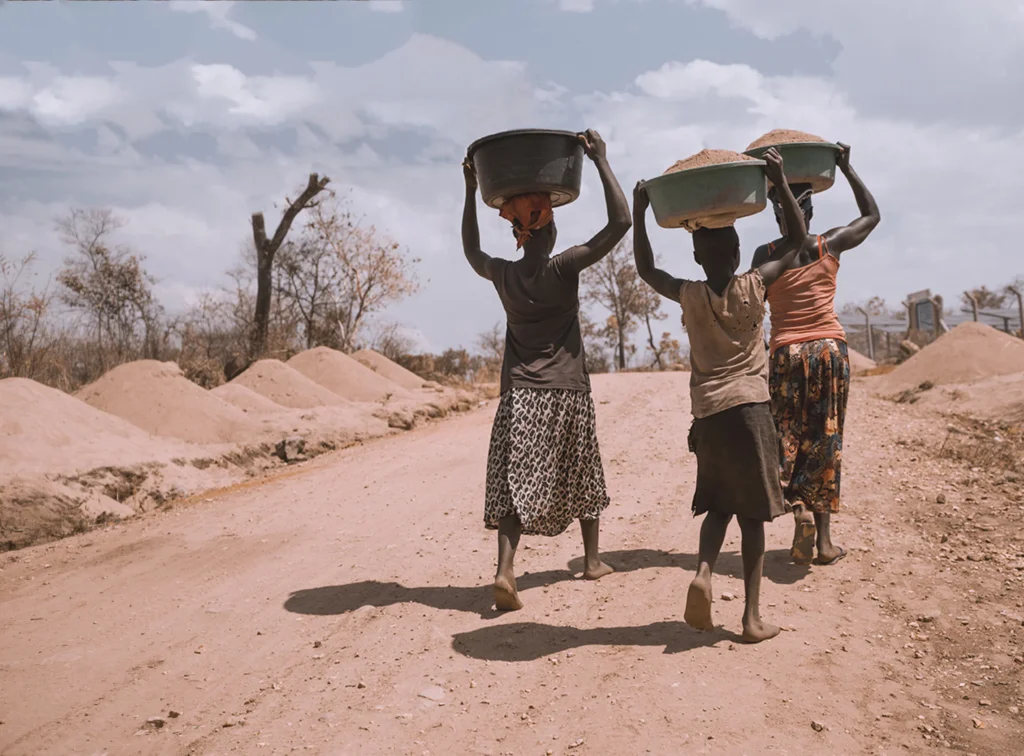
The term ‘climate migrant’ is becoming a familiar headline, a single label for millions of people on the move. But this simple term hides a more complex and profoundly gendered reality. From the drought-stricken fields of the Horn of Africa to the floodplains of Bangladesh, the climate crisis is not an equal-opportunity disruptor. It hits women and men differently, it forces them from their homes for different reasons, and it exposes them to vastly different dangers along the way. Understanding these differences is not an academic exercise; it is the critical first step toward creating just and effective policies. The climate migration crisis isn’t just about who moves. It’s also about who is left behind, who faces greater danger on their journey, and ultimately, who holds a unique key to building resilient communities in the face of unprecedented environmental change.
Before anyone even takes a single step to flee, the climate crisis has already dealt a disproportionately lethal blow to women. The data is stark: women and children are over 14 times more likely to be killed by climate-fueled disasters than men. This is not a matter of physical strength but a direct result of pre-existing gender inequalities. Deeply embedded socio-cultural norms and limited access to resources, decision-making power, and life-saving information create unique vulnerabilities. Crucially, this means women are not vulnerable by nature but are made vulnerable by patriarchal power structures that limit their access to public services, education, property rights, and formal employment. When warnings are not tailored to reach them, when cultural rules restrict their mobility, or when their caregiving roles tie them to the home, women face a far greater risk of perishing in a crisis they did not create. “Women are disproportionately affected by climate change, owing in particular to gender inequality in access to resources and decision-making.”
These harms shape everything that follows. The gendered impacts of climate migration create two distinct but related crises: one for the women who are forced to migrate and another for the women who stay behind. Both face a cascade of risks that are often invisible in policy discussions. For women on the move, the journey away from a climate-ravaged home is fraught with danger, but for women and girls, the risks are magnified. They face heightened exposure to human trafficking, sexual harassment, and forced labor. In Guatemala, it has been reported that an appalling six out of ten women who migrate experience rape during their journey. Even if they reach a destination, the struggle continues. Data from Bangladesh reveals a significant economic disparity: male climate migrants are three times more likely to be paid employees, while many of their female counterparts end up working as unpaid contributing family workers.
For women left behind, the impacts are different but equally severe. When men migrate in search of work, the women who remain face a new set of immense challenges. Evidence from Bangladesh shows that these women often confront additional economic hardships. A UN Women study found that 85 percent of these women do not receive enough support, or receive no support at all, from their migrant husbands. On top of this, they carry a heavier burden of care responsibilities, face disruptions in their access to crucial maternal and reproductive health services, and report a higher risk of gender-based violence and harassment in communities where social structures have been upended.
These pressures then shape the most difficult question of all: whether to leave or stay. The very decision to migrate is shaped and constrained by gender. Studies show that women often “wait longer to migrate” because they face higher social costs, greater risks, and significant barriers rooted in cultural practices and their reproductive roles. They must weigh their safety against social norms, care responsibilities, and a journey that is far more perilous for them. This leads to the tragic phenomenon of “climate-related immobility.” The most vulnerable members of a community, often women, especially the elderly, can become trapped in increasingly uninhabitable locations. They are left behind not by choice, becoming ‘trapped populations’ who may wish to flee but are unable because they lack the financial resources, social networks, or physical ability to move away from danger.
As the crisis deepens, another consequence emerges in many communities. As climate-induced droughts, floods, and food shortages push families deeper into poverty, some resort to desperate measures to survive. One of the most devastating is the increase in child, early, and forced marriage. For families struggling to cope, marrying off a daughter is sometimes perceived as a grim coping mechanism, one less mouth to feed, or a way to secure resources like livestock. In Ethiopia, for instance, researchers found that the number of girls sold into early marriage in exchange for livestock increased dramatically after drought-induced migration. This is not a choice; it is a consequence of a crisis that robs girls of their future.
Yet even amid these challenges, the narrative must also recognize women’s strength. While it is crucial to recognize the disproportionate burdens women carry, it is a profound mistake to see them only as victims. Across the globe, women are not just surviving the climate crisis; they are leading the charge in building resilient and innovative solutions. Empowering women is not just a matter of justice; it is a strategic necessity that creates a ‘win-win situation’ for climate resilience. Their inclusion and leadership in decision-making strengthens preparedness, fosters innovation, and leads to more effective and sustainable outcomes for entire communities. Consider the all-women cacao cooperative in Costa Rica, where local and asylum-seeking women worked together to rebuild a plantation that had been destroyed by a flood. Or look to the Sahrawi refugee women in Algeria who are recycling plastic waste into tables, chairs, and other useful products, turning a pollution problem into a sustainable livelihood. These are not isolated stories; they are proof that empowering women is one of our most effective tools for climate action. “Combining bold climate action with progress in gender equality is one of the most effective strategies to break away from business-as-usual scenarios and drive transformative change.”
All of this leads to the final point. The evidence is clear and overwhelming. The climate migration crisis is a gendered crisis. Any response, from international climate finance to national adaptation plans to local disaster relief, that ignores this fundamental truth is doomed to fail the people who need it most. We cannot afford to create policies that are blind to half the population. The real challenge is to see the crisis through a gendered lens and design solutions that not only protect women but actively empower them. This leads us to a final, critical question: Given that women are both disproportionately harmed by the climate crisis and hold a unique power to build resilient communities, what will it take for our policies to finally see them not as a problem to be managed, but as the leaders we need?
About the author:
Saif Ali Mangan – Lawyer | Researcher & Advocacy Assistant at MigraClima