
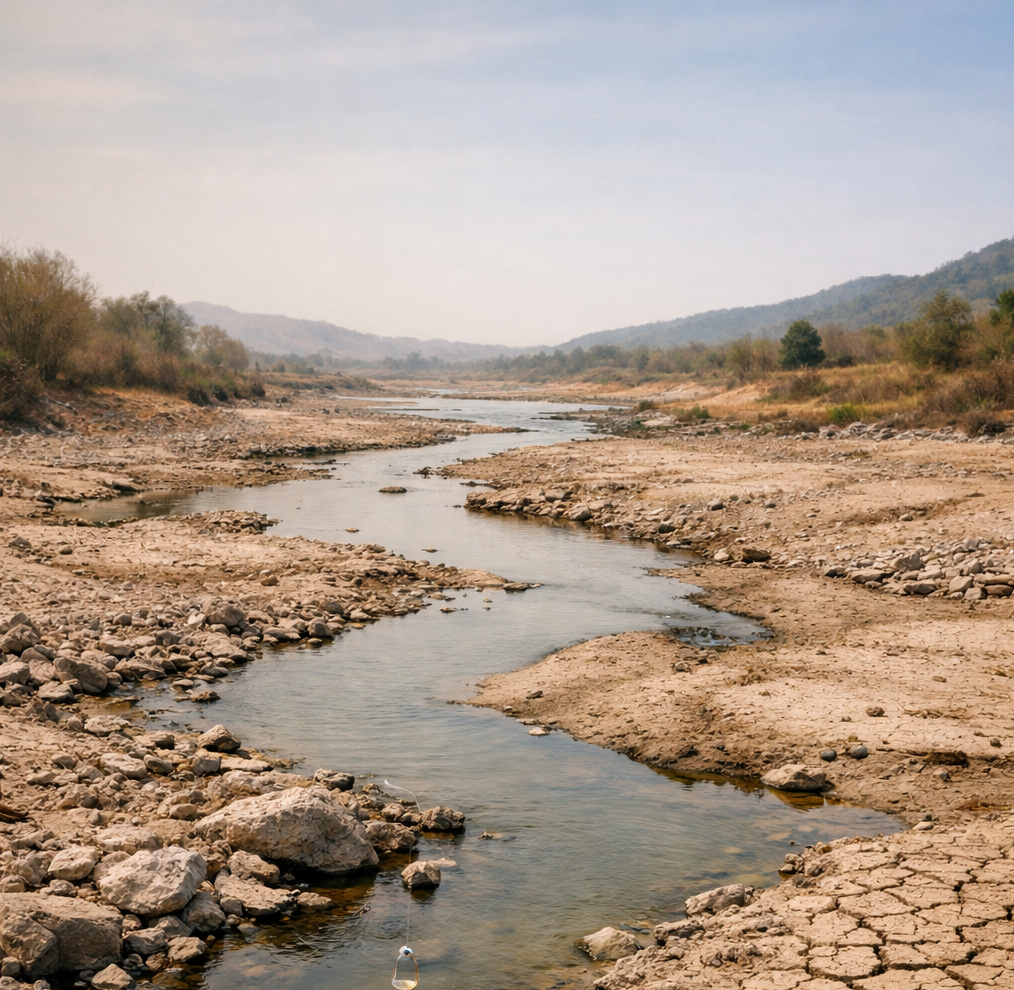
Water Scarcity as the New Borderline of Survival
In a world racing against climate change, water is no longer just a resource – it is a dividing line between survival and displacement, between stability and collapse. Water scarcity today stands as one of the most powerful drivers of forced migration in the Middle East and across the Global South, exposing deep cracks in environmental justice (Mixed Migration Centre, 2024).
Jordan’s Water Poverty: Refugee Influx Meets Fragile Infrastructure
Jordan is among the driest countries in the world, with per capita water availability below 100 m³/year, far beneath the global water poverty threshold of 1000 m³ (Sundial Press, 2025). The arrival of more than 1.3 million Syrian refugees has intensified this crisis, straining already fragile water and sanitation infrastructure. Host communities and refugees alike face mounting challenges in accessing clean water, underscoring the intersection of environmental scarcity and humanitarian displacement.
Rivers in Retreat, Farms in Collapse: Displacement Across Iraq and Syria
In Iraq, declining flows of the Tigris and Euphrates rivers have devastated agriculture, forcing thousands to abandon rural livelihoods and migrate to urban centers (CSIS, 2024). Similarly, Syria’s repeated droughts have triggered widespread internal displacement, particularly among farming communities whose survival depends on rain-fed agriculture. These cases illustrate how environmental degradation translates directly into social instability and migration pressures.
Displacement and Immobility: Climate Stressors in the Global South
A recent study estimates that over 143 million people in the Global South could be displaced by 2050 due to climate stressors such as drought, heat, and floods (Nature Climate Action, 2024). Yet displacement is only part of the story. Many communities remain rooted despite scarcity, constrained by limited resources or cultural ties a phenomenon of “immobility” that is as critical as migration itself (United Nations University, 2024). This dual reality highlights the uneven geography of climate vulnerability, where both movement and immobility reveal systemic fragility.
From Scarcity to Justice: Building Inclusive Climate Responses
Forced migration due to water scarcity is not merely an environmental crisis; it is a moral challenge that demands inclusive, just, and forward-thinking solutions. Regional cooperation on transboundary water management, investment in climate-adaptive agriculture, and refugee-inclusive planning are essential pathways forward. As one climate expert observed: “Water is life, but justice is what makes life possible for all.”.
Water and Justice: Shared Burdens, Shared Futures
Water scarcity is not destiny, it is a test of justice. The Middle East and the Global South stand at the frontline of climate displacement, but they also hold the seeds of adaptation. Fair solutions demand that refugees, host communities, and fragile states are not left to carry this burden alone. Justice must flow as freely as water, across borders and generations.
About the author:
Sara. M. AlKhalid – Geologist, and researcher in Water Resources & Environmental Sustainability
LinkedIn: https://www.linkedin.com/in/sara-m-al-khalidi-a129b52a4/